Canada by rail, Toronto to Vancouver: planning data for days of long offline stretches
Several days and nights on a train across a continent, with towns hours apart. The plan is less about coverage than about what you download before you board.
For a cross-Canada train from Toronto to Vancouver, one Canada eSIM covers the trip, but expect long stretches without signal across northern Ontario, parts of the prairies and the Rockies. Download maps, entertainment and documents before boarding, check messages when the train passes towns, and choose validity that covers stopovers before and after the journey.
Is a cross-Canada train a one-plan trip?
For coverage, yes: the whole journey is in Canada, so one Canada plan covers it. The long-distance train between Toronto and Vancouver takes several days and nights, crossing the forests and lakes of northern Ontario, the prairies of Manitoba and Saskatchewan, Alberta and the Rockies around Jasper before descending to the Pacific. Mobile coverage in Canada follows towns and highways, and much of this route follows neither.
Coverage check: each stop against the country lists TripoSIM publishes for its regional plans
| Country on the route | Country plan | North America plan 3 listed | Global plan 129 listed |
|---|---|---|---|
| Canada | Yes ↗ | Listed | Listed |
If you add the United States before or after, for example Seattle after Vancouver, a plan that lists both countries saves a second install. When we checked on 7 November 2026, TripoSIM's North America plan listed Canada, the United States and Mexico.
Where are the long quiet stretches?
We do not publish signal maps, and coverage changes as networks expand. The general shape of the journey for planning purposes:
| Section | What to plan for |
|---|---|
| Toronto and southern Ontario | Well served; do your last downloads here |
| Northern Ontario forests and lakes | Long stretches without signal; brief coverage near towns |
| Winnipeg and the prairies | Coverage near cities and some towns; open country between |
| Edmonton | City coverage during the stop |
| Jasper and the Rockies | Town served; mountain sections quieter |
| Fraser valley into Vancouver | Coverage returns as you approach the city |
What should you download before boarding?
- Entertainment: films, series, music, podcasts and books for days, not hours.
- Offline maps for any stopover cities and for the regions you cross, if you like to follow the route.
- Tickets and documents: rail tickets, cabin details, stopover hotel bookings and onward travel, saved offline.
- Work you need to finish: documents synced for offline editing; anything to send queued for the next town.
Some long-distance trains offer Wi-Fi, but availability and speed on remote routes are limited; check what the operator currently offers for your class of travel and do not plan work around it.
How do you use the stops?
The train stops at cities and small towns along the way, some for long enough to step onto the platform. When it does, the phone may pick up a signal: a good moment for messages and quick checks. If you break the journey with a stopover, say a few days in Jasper, treat it like a normal arrival: switch on, check maps, confirm the next leg.
How do you keep the phone charged?
A phone that searches for signal for hours drains its battery. On long offline stretches, switch on airplane mode (Wi-Fi can be switched back on if the train has it) and turn it off when you approach a town. Check what charging your cabin or seat has, and carry a power bank as a backup.
A sample connection plan with one stopover
- BeforeT−3Install at homeCanada plan installed, labelled and switched off. Downloads for several days done.
- Day1Land in TorontoTravel line on, set for data, data roaming on for that line. Home line's data roaming off.
- Day3Board the trainLast downloads on station Wi-Fi or city coverage.
- Day4Northern OntarioAirplane mode on long stretches; messages near towns.
- Day5The prairiesCoverage near cities; quiet between.
- Day6Stopover in JasperBack online in town; confirm the next leg.
- Day9VancouverCity coverage. Save the airport route.
- Day10Fly homeSwitch data back to your home line after landing.
Can you work on the train?
Only offline, for most of the journey. If you need to stay reachable for work, tell colleagues in advance that you will be out of contact for long periods, set an out-of-office message, and plan any calls for the stopover cities. Sync documents for offline editing before boarding and queue emails to send when the train reaches a town. A phone hotspot will only work when the phone itself has signal, so it does not solve the problem; it just moves it to the laptop.
Which mistakes are common on a cross-Canada train?
| Mistake | What happens | What to do instead |
|---|---|---|
| Planning to stream on board | Nothing loads for hours | Download for days before boarding |
| Validity counted only for the train days | The plan ends during a stopover | Count from first connection to the last day |
| Phone searching for signal all day | A flat battery by evening | Airplane mode on long stretches |
| Assuming on-board Wi-Fi | Missed work deadlines | Check with the operator; plan offline |
A long train across Canada is one of the few trips where being offline is part of the appeal. The plan is there for the cities at either end and the stops in between.
A checklist before boarding in Toronto
- Canada plan on and working in the city.
- Entertainment for several days downloaded on Wi-Fi.
- Tickets, cabin details and stopover bookings saved offline.
- Power bank charged, and a cable long enough to reach the socket.
- Family and colleagues told when you expect to be offline.
How long should the plan be valid?
Count from your first connection in Toronto to your last day in Vancouver, including the nights on board and every stopover. The offline days on the train still count, because validity keeps running whether or not the phone has signal. Add a spare day for a delay: long-distance trains can run late, sometimes by many hours. TripoSIM plans start on first connection at the destination, so installing the plan at home before you fly does not use up any of it. If you continue to the United States, count those days too, or choose a plan whose list names both countries.
Data use is unusual on this trip: very little on the train, more in the cities at either end. A plan sized for the city days is usually enough.
Questions travellers ask
Is there mobile signal on the train across Canada?
Near cities and towns, yes; across much of northern Ontario, the prairies and the mountains, expect long gaps.
Is there Wi-Fi on long-distance Canadian trains?
It depends on the train and class, and remote sections limit it. Check with the operator and do not depend on it.
Do I need a US plan if I continue to Seattle?
Yes, unless your plan lists both Canada and the United States. A North America plan that names both saves a second install.
How long should the plan be valid?
From your first connection in Toronto to your last day in Vancouver, including stopovers, plus a spare day.
Sources and notes
Device steps and roaming rules are from the official pages below. Statements about TripoSIM's plans come from TripoSIM's public pages, checked on 7 November 2026; the seller's checkout is the final word on countries, validity and price. We do not claim field tests or network measurements in this article.
- VIA Rail Canada
- Apple: use eSIM while travelling internationally
- Google Pixel Help: use two SIMs
- TripoSIM: how it works
Filed under: Americas Trip length & route shape
Plan the rest of the trip
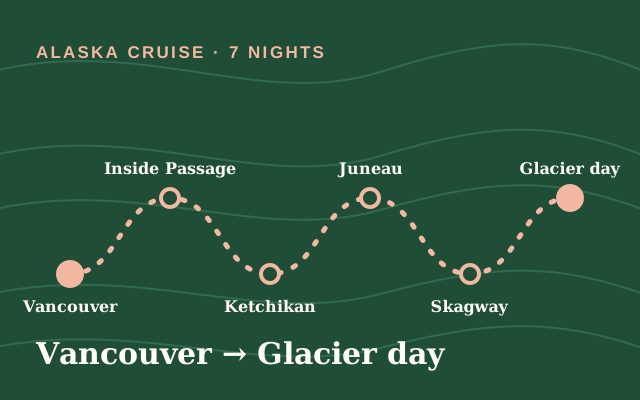 Alaska cruise · 7 nightsAn Alaska cruise from Vancouver or Seattle: Canada, the US and the long stretches at seaGuideUS–Canada–Mexico Road Trips: An eSIM Border Checklist
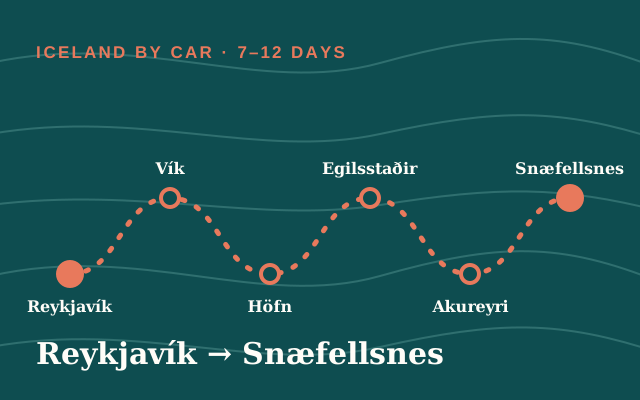 Iceland by car · 7–12 daysIceland's Ring Road: planning mobile data for a week or more around the islandRoute hubAmericas routes: road trips, borders and overland journeys